How Churchill’s Impossible Artificial Harbours Saved D-Day (Mulberry Harbours)
By 1944, the Allied advance faced a critical bottleneck: liberating Europe required landing millions of tons of supplies, yet every major French port had been heavily fortified by Nazi forces.
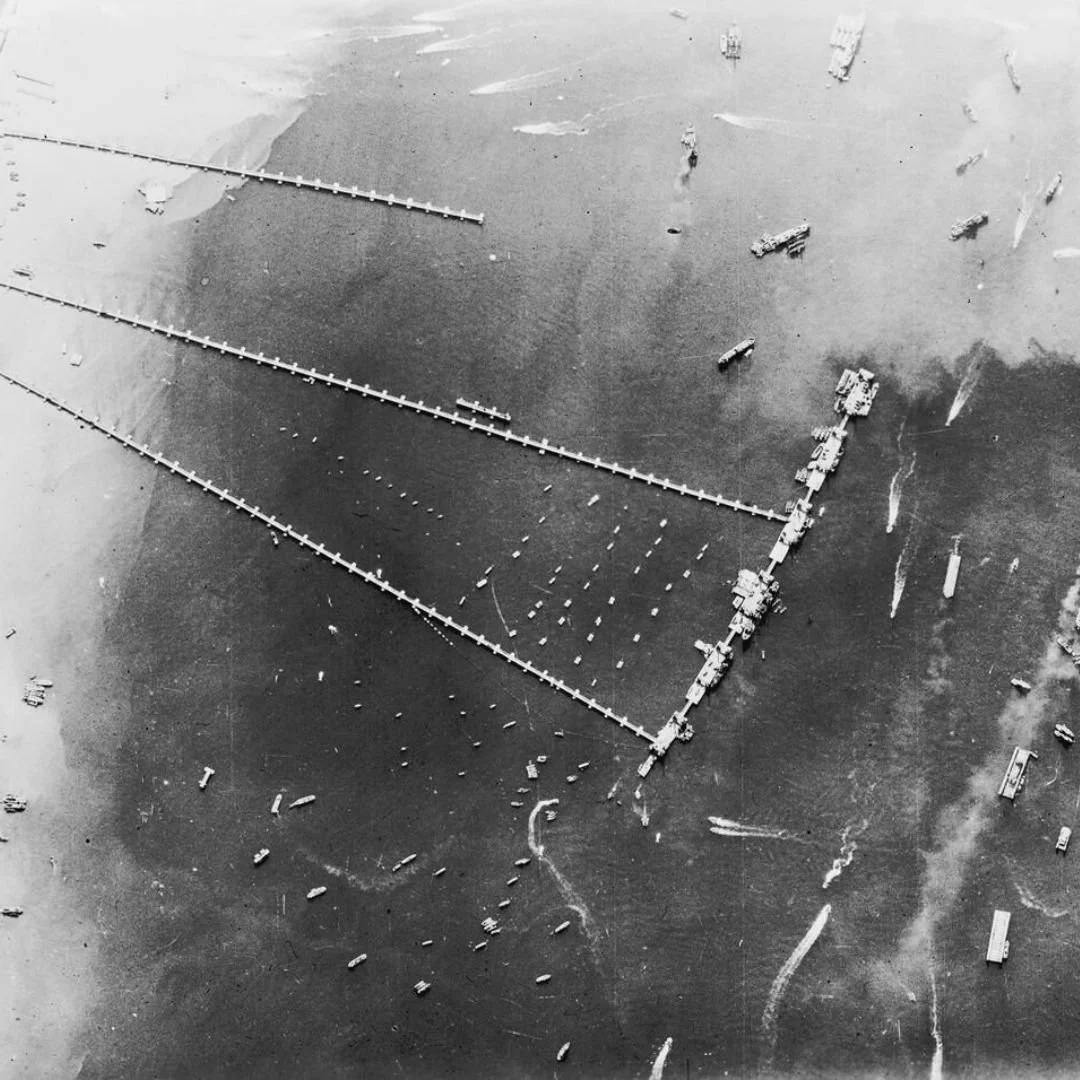
To bypass this obstacle, the Allies secretly engineered the Mulberry Harbours.
These massive, hollow concrete caissons and floating steel roadways were towed across the English Channel directly to the Normandy coast.
By intentionally flooding and sinking the structures, engineers created a fully functioning, artificial port overnight, an achievement that’s still one of the greatest engineering triumphs in military history.
The year was 1944, and the Allied Supreme Command faced a logistical paradox that threatened to derail the liberation of Europe before a single soldier touched French soil.
The blueprint for Operation Overlord was ambitious, demanding the landing of hundreds of thousands of troops and millions of tons of vehicles, ammunition, and rations within the first few weeks of the invasion.
However, military doctrine dictated that a successful amphibious invasion of this scale required the immediate capture of a major deep-water port.
The Germans knew this.
Under the direction of Field Marshal Erwin Rommel, the Nazi regime had spent years transforming every existing French port along the English Channel into an impregnable fortress.
From Cherbourg to Le Havre, the Atlantic Wall was at its thickest around the harbours.
A direct assault on any of them would be suicidal, as the catastrophic 1942 raid on Dieppe had already brutally demonstrated.
The Allies were trapped in a vicious tactical circle: they could not conquer Europe without a port, but they could not conquer a port without the heavy equipment only a port could land.
The solution to this impossible riddle was born from a mixture of desperation and sheer British eccentricity.
If the Allies could not capture a harbour, they would simply have to build one, pack it up, and tow it across the English Channel with them.
This was the genesis of the Mulberry Harbours, an engineering endeavour so audacious that many high-ranking officials initially dismissed it as a dangerous fantasy.
The concept, championed fiercely by Prime Minister Winston Churchill, required rewriting the rules of civil engineering.
The Allies needed to construct two full-scale artificial ports, each roughly the size of Dover, in total secrecy.
The components had to be fabricated in pieces across the United Kingdom, hidden from German aerial reconnaissance, and designed to withstand the volatile tides and notorious storms of the Normandy coast.
What followed was a triumph of industrial mobilisation.
Over 40,000 workers across various British shipyards and construction sites laboured to build the monstrous components of the Mulberries.
The harbour system relied on three main elements.
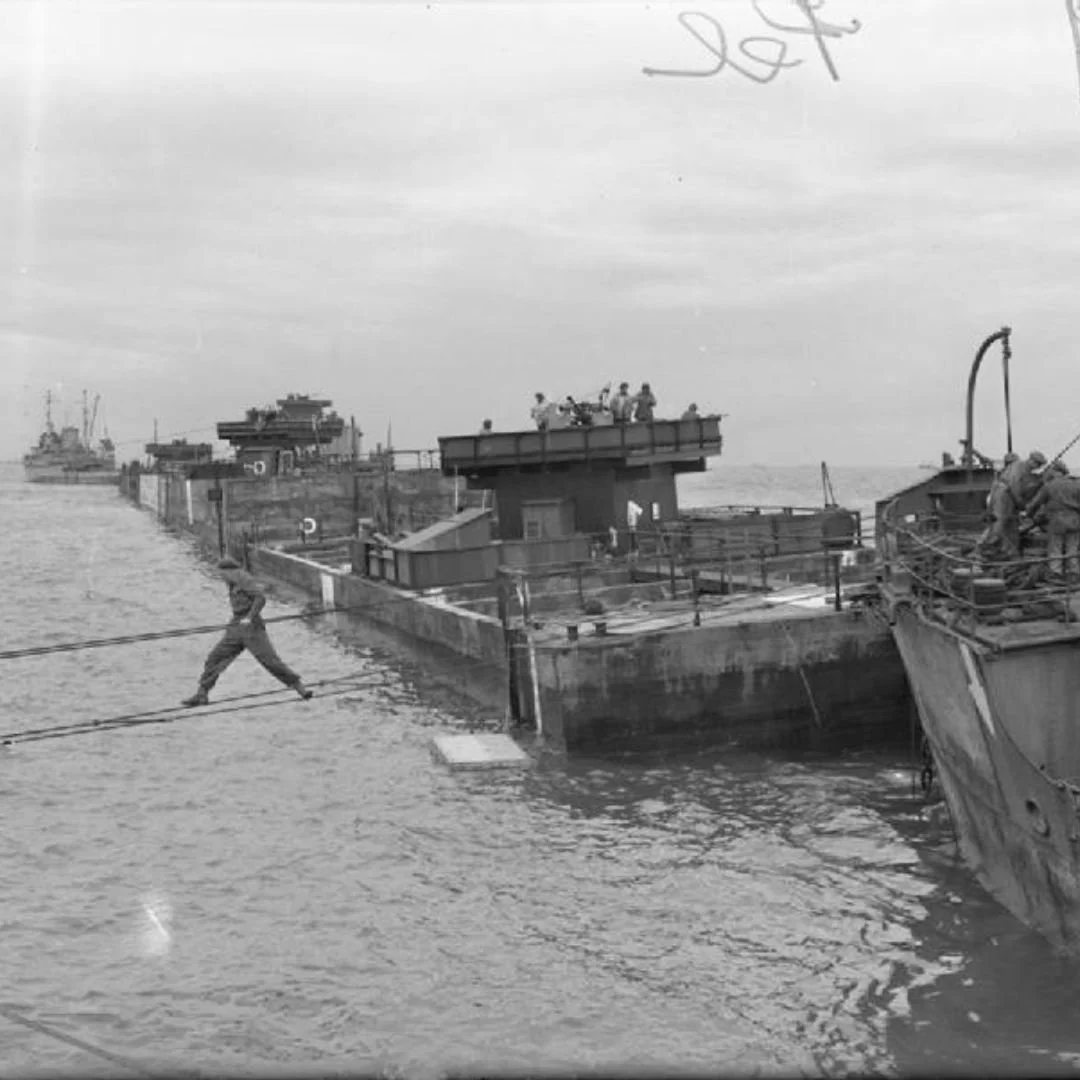
First came the ‘Gooseberries,’ which were old merchant ships and warships slated to be intentionally scuttled to form an initial breakwater.
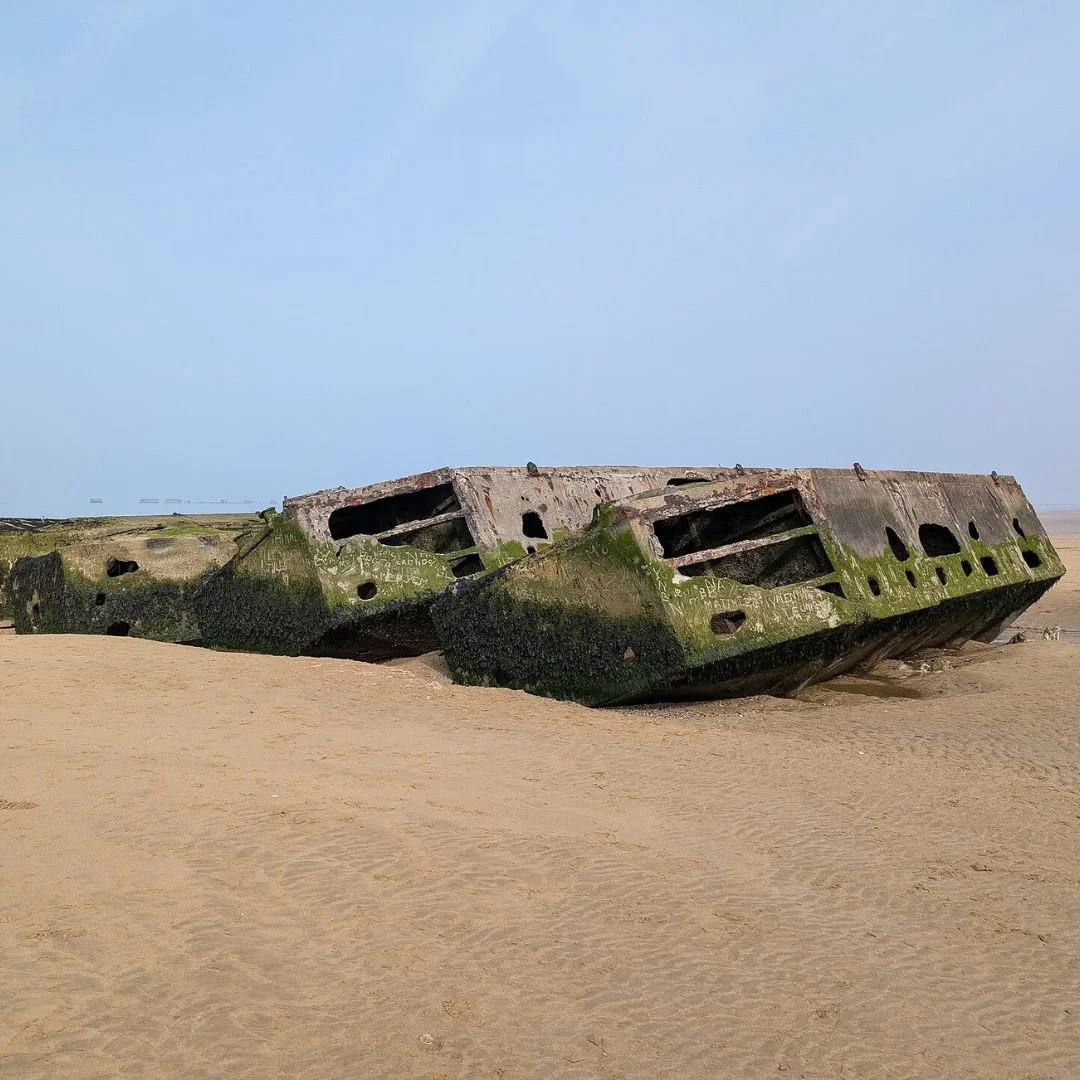
Behind this outer shield lay the ‘Phoenixes,’ mammoth hollow concrete caissons, some as tall as a five story building, designed to be towed across the sea and then flooded to sink firmly onto the seabed.
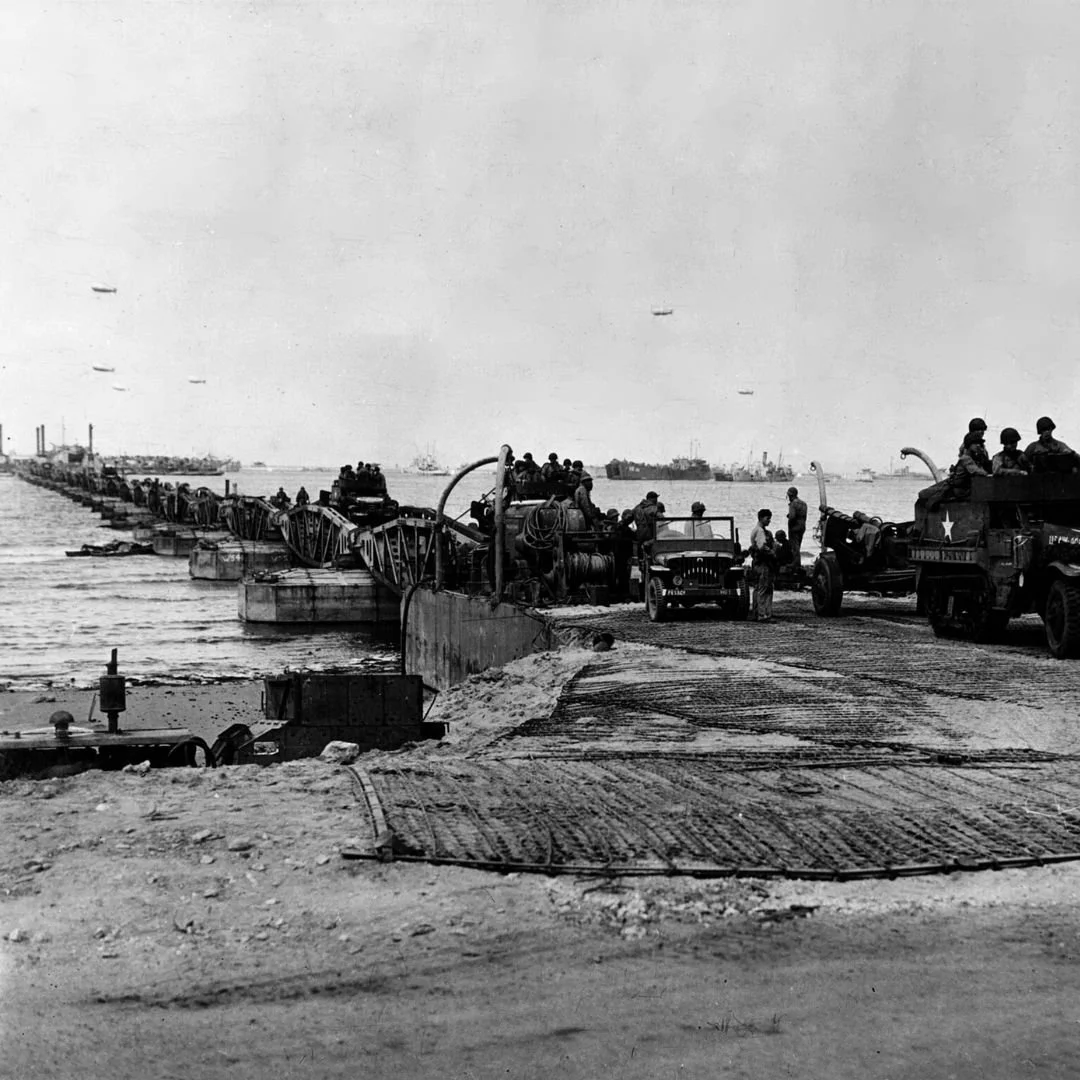
Finally, there were the ‘Whales,’ floating steel roadways mounted on concrete pontoons that could rise and fall with the dramatic 20 foot Normandy tides, allowing trucks to drive directly from ships to the shore.
On June 6, 1944 as the first waves of infantry stormed the beaches, the secret armada of the Mulberries began its slow, agonising journey across the Channel.
Towed by a fleet of tugboats, the massive concrete structures moved at an agonisingly slow pace, vulnerable to both U-boat attacks and the elements.
Remarkably, the operation caught the German high command completely off guard.
Nazi intelligence had focused entirely on defending existing infrastructure, never imagining that the Allies would bring their own coastline with them.
By June 9 just three days after D-Day, the assembly of Mulberry A at Omaha Beach and Mulberry B at Arromanches was underway.
Pieces were positioned with surgical precision, valves were opened, and the giant Phoenix caissons sank into place, instantly taming the rough waters of the Channel.
Within days, the artificial harbours were fully operational, transforming the shallow beaches of Normandy into the busiest shipping ports in the world.
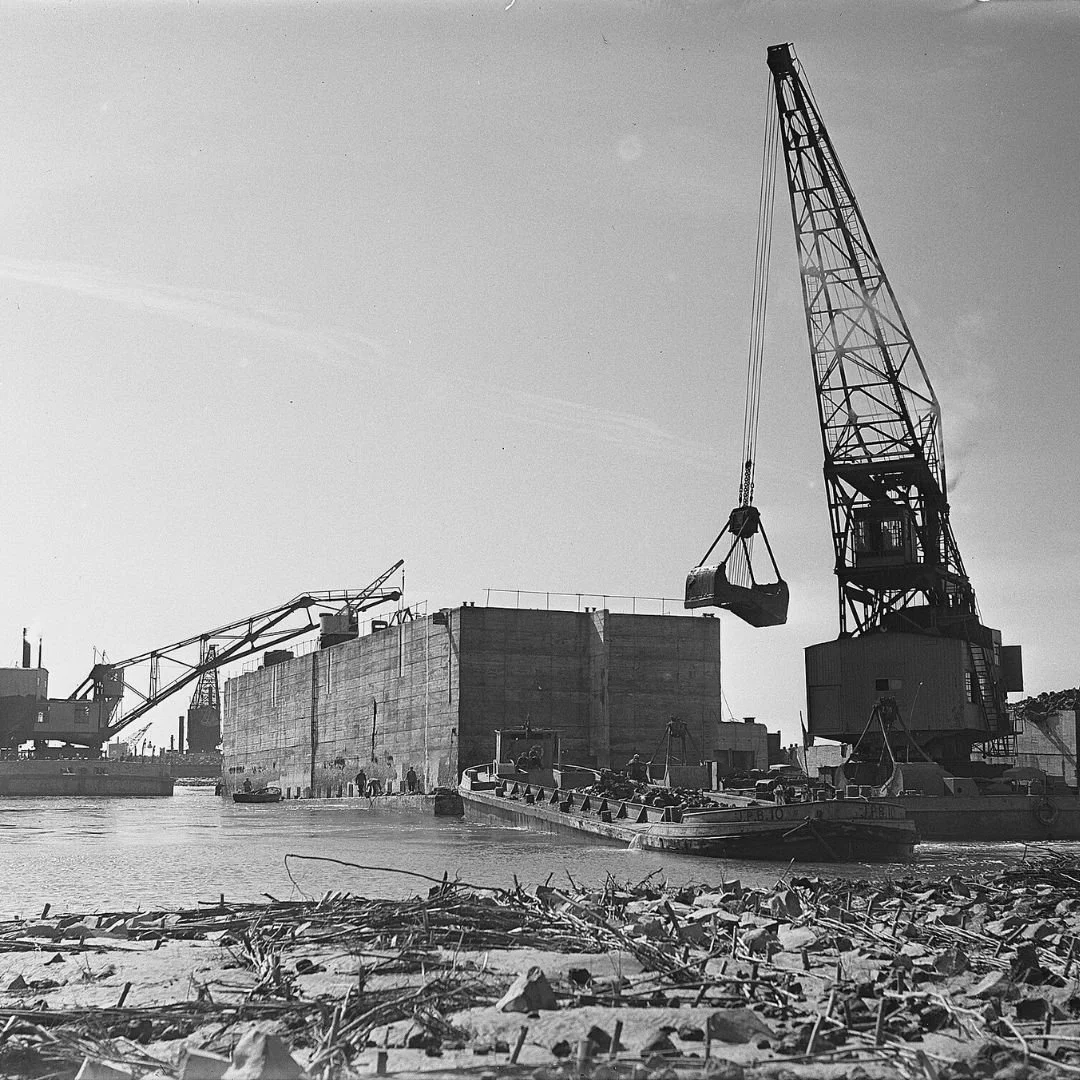
The system faced its ultimate test just two weeks later, when a fierce, unseasonal gale battered the Normandy coast for three days.
While the American Mulberry A was severely damaged and eventually abandoned, the British Mulberry B at Arromanches survived the onslaught.
It became the lifeline of the Allied advance.
Over its ten months of active operation, Mulberry B facilitated the landing of over 2.5 million men, 500,000 vehicles, and 4 million tons of supplies, effectively fuelling the drive into the heart of Germany.
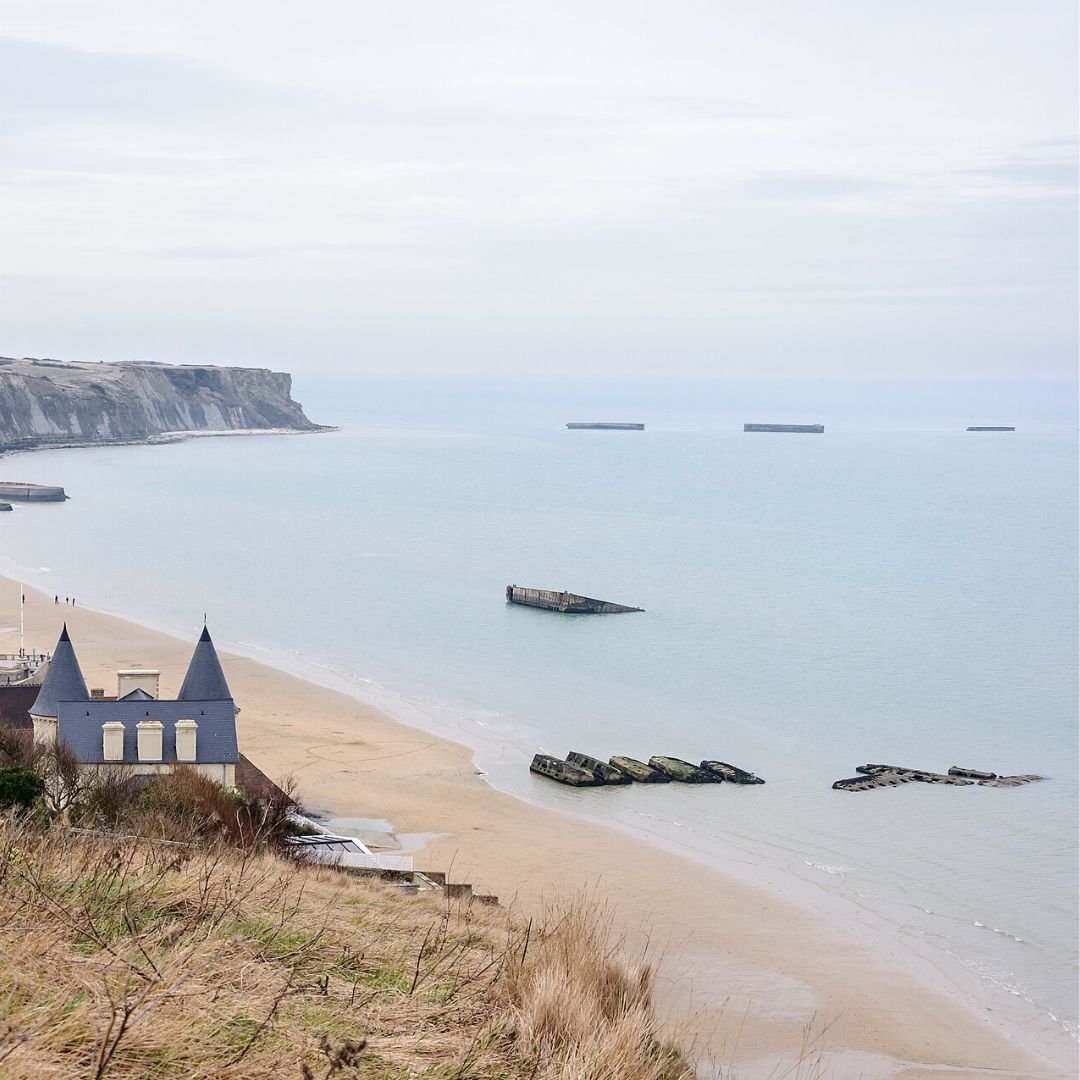
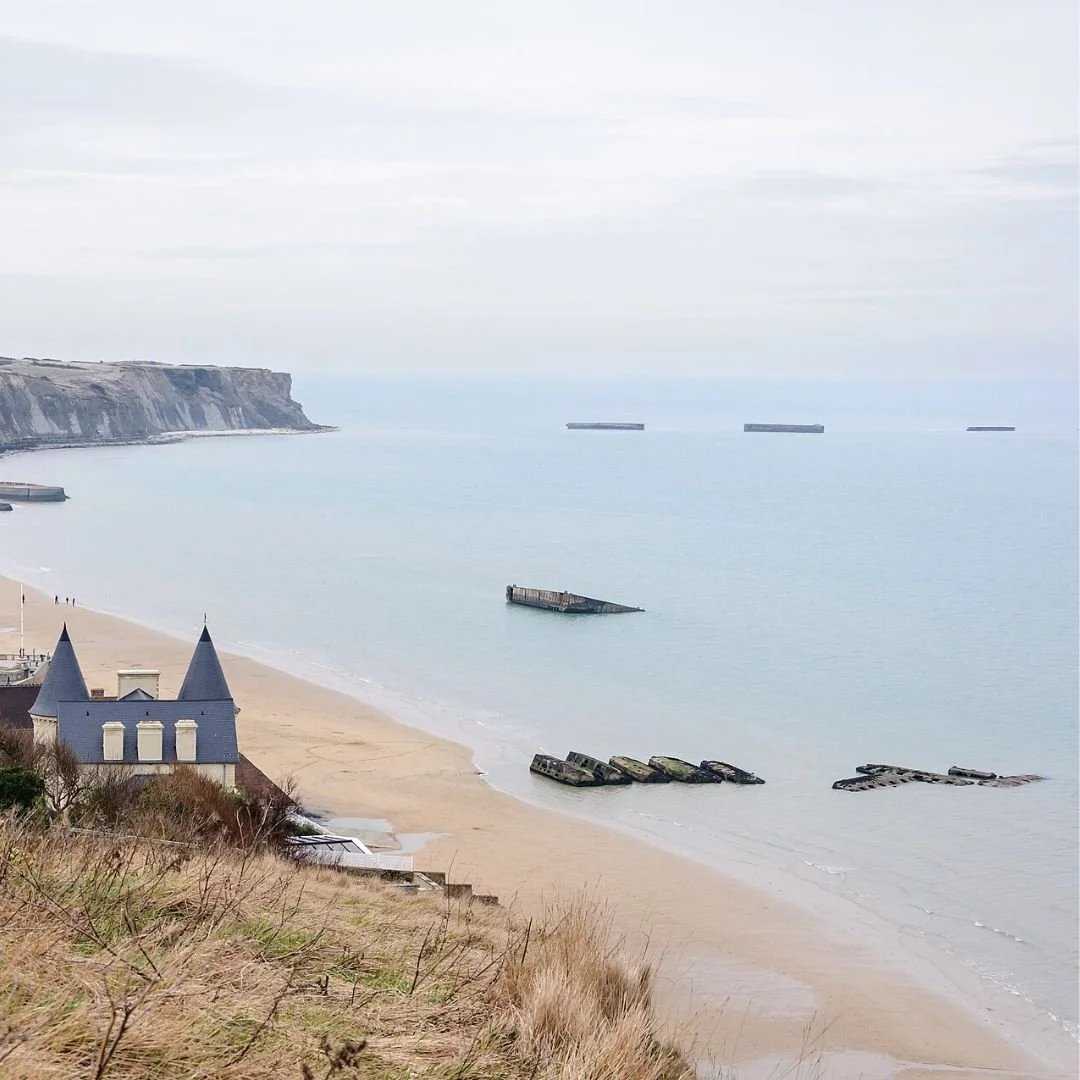
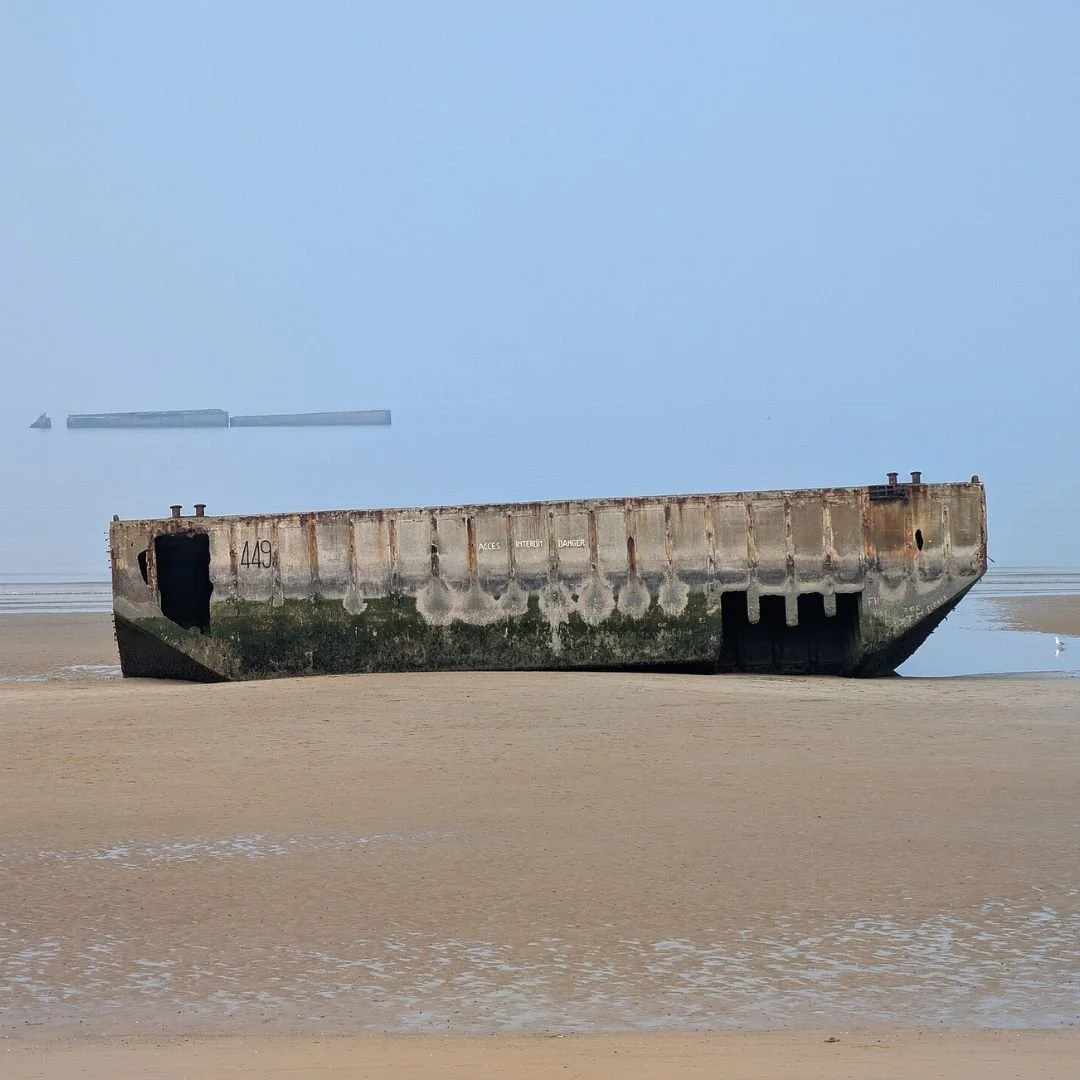
Today, the quiet coastal town of Arromanches-les-Bains looks out over a hauntingly beautiful scene.
Rising from the sea like the bones of forgotten giants, the decaying concrete remains of the Phoenix caissons still break the waves.
If you enjoyed this article, please follow Exploring GB on Facebook for more!
Thank you :)